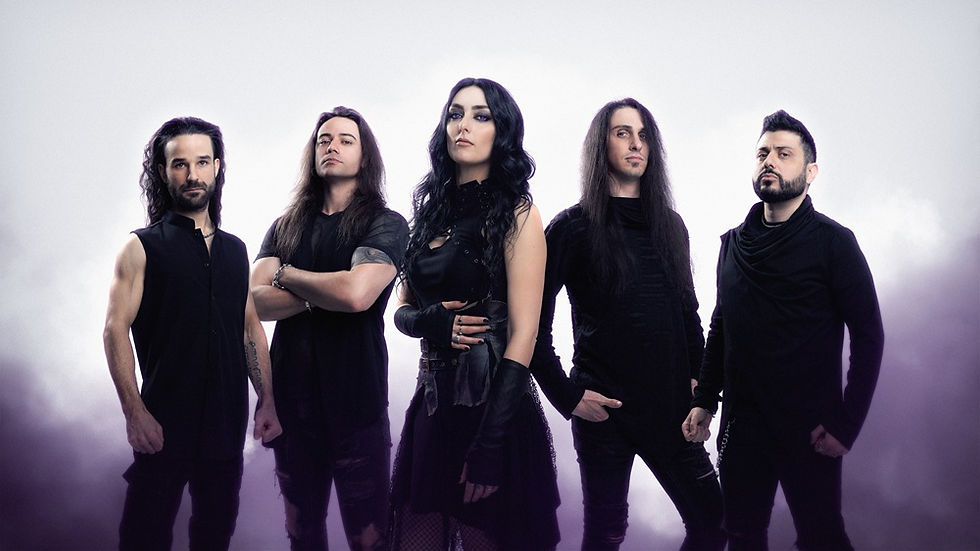
How We’re Producing and Recording the New Alterium Album – Step by Step ⚔️🎙️
Many of you are often curious about how the writing, recording, and production process of an album actually works. Since I’ve been in this world since I was 16, I probably always took it for granted that everyone knew how it all happens and especially how much work and financial commitment stands behind it. Yes, because unfortunately for a band of our size, everything is still self-funded.
That’s why I decided to write this blog post: to walk you through how a record is born, the different steps involved, and where we currently stand.
Recording a new album is always a mix of chaos and magic. There’s the songwriting, the planning, the doubts, the adrenaline, the late-night ideas… and then that moment when a song finally comes alive through the speakers.
Let’s start from the beginning.

1. Songwriting & Pre-Production: Where the Vision Takes Shape
Before stepping into the studio, we spend months writing and refining:
Song structures
Tempos and keys
Vocal melodies
Orchestral arrangements
Lyrics and storytelling
This is the most creative phase. We write, rewrite, cut parts we love, argue (nicely 😈), and make sure every track has a clear identity.
Often, a song is born from one of us: it could be a guitar riff, a vocal line, or a melodic idea. That person develops the arrangement and then shares it with the band. At that point, Paolo and I usually step in as producers, making the necessary adjustments and shaping the song so that it flows naturally and effectively.
Until recently, I used to delegate this entire production role to an external producer. But after 15 years and more than 10 albums recorded (and especially thanks to constantly listening to both modern and classic metal releases) this time I decided to take the reins together with Paolo. And honestly? I think we’ve done a great job.
At this stage, we record demo versions at home. They don’t need to sound perfect, but they already give us a very clear idea of how the final version will feel.
The better the pre-production, the smoother and faster the real studio work will be. Good demos also help you identify potential singles early on.

We actually started writing material at the end of 2024. However, for various reasons (including the release of the Stormrage EP last summer) the process lasted until December 2025, when I completed the vocal parts (although I kept making small adjustments in the following months).
By the end of this phase, we had 14 original demo tracks. And I have to say: this album already sounds much stronger in demo form compared to the demos of Of War and Flames. Usually, songs improve significantly during final recordings, so that’s a very good sign.
Fun fact: one of the songs was born from a vocal line I had originally written for what was supposed to be the third album of Kalidia. That vocal line was simply too beautiful to stay in a drawer. The song developed in a completely different direction compared to the original arrangement and I can tell you I like this version much, much more. Let’s see if you’ll guess which one it is when the album comes out.
Thankfully, during this phase we don’t have major expenses: all demos are recorded in our home studios (Paolo and Alessandro even have more professional setups at home).
2. Drum Recording 🥁
When pre-production is solid, the order of recording instruments becomes less critical: we already know how everything should sound and what each of us needs to play.
Still, we’ll begin with drums.
Dario (under Paolo’s supervision) will start recording on March 19 at Domination Studio in Rimini, Italy, owned by Simone Mularoni. We’ve booked four full days. Usually, half of the first day is dedicated to drum setup and tuning, and then recording begins. Let’s see how long it takes Dario to track all the songs!
Since we’re working in an external studio, this phase expenses includes studio rental, editing (choosing the best takes), travel expenses, hotel, food (and trust me, feeding Dario is no small task!), consumables (new drumheads, sticks, cymbals). We estimate this phase at around €2,000 total.

After drums, we’ll move forward in parallel with the other instruments, including vocals.
3A. Rhythm Guitars & Bass 🎸
After drums, Alessandro will record the rhythm guitars, usually quad-tracked to create that powerful wall of sound typical of metal productions. He’ll track everything in his home studio, which makes the process faster since he’s also an experienced producer.
Then it’s time for bass, which glues everything together. In symphonic and power metal, bass may feel subtle, but it’s essential: it reinforces the low end and adds weight to the riffs. Scala will travel to Rome to record in Paolo’s studio.
Most of this phase will happen in Alessandro’s and Paolo’s studios, which significantly reduces costs. Remaining expenses include travel, consumables like high-quality strings (yes, good strings are expensive!), and possible instrument setups by a luthier.
We estimate around €500–600 for this stage. By the end of this phase, we’ll already have “mix-ready” tracks, since editing will also be handled internally.
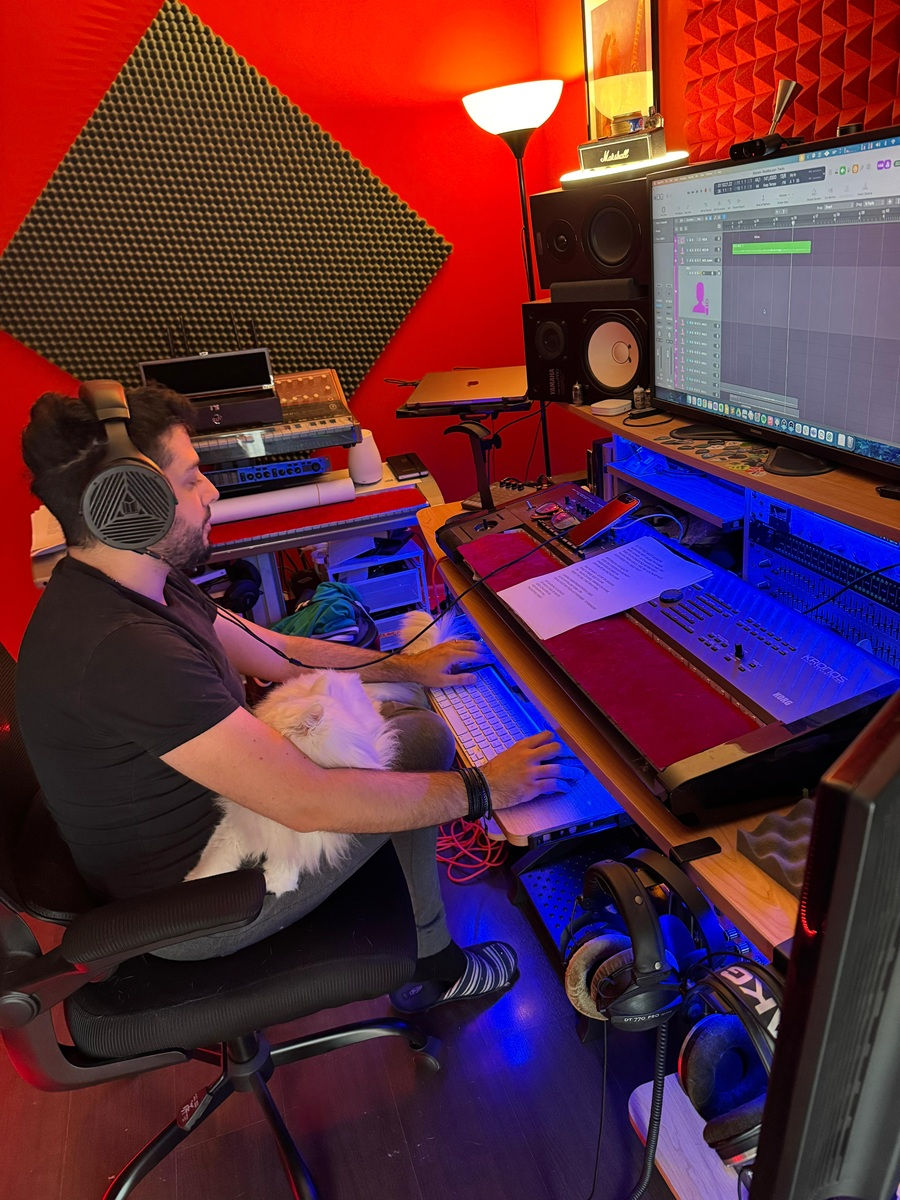
3B. Orchestrations, Keyboards & Additional Arrangements 🎻✨
Our sound blends power metal with symphonic and modern elements, so orchestration is a huge part of the production. We layer strings, orchestral parts, and synth textures.
Paolo is the absolute master here. Many of you know him as a guitarist, but he originally comes from a piano and keyboard background. He’ll take care of all orchestration and additional arrangements for the new record.
Luckily, this step doesn’t involve extra costs, except maybe a dangerous amount of energy drinks for Paolino 😄.

3C. Lead Vocals 🎙️
Meanwhile… it’s my turn.
Once again, I decided to work with Lars Rettkowitz at his Emperial Sound Studio in Germany. You might know him as the guitarist of Freedom Call, but he’s also the producer behind The Frozen Throne and Of War and Flames.
Working with Lars over the years has taught me so much. He pushes me hard: endless takes, constant focus, zero compromises. But when I look at the results, it’s always worth it.
I’ve currently booked around 10 studio days (split into three weekends because I can’t take time off from my veterinary job), starting at the end of March. We’ll see if additional sessions will be necessary.
It might sound like a lot of time, but achieving truly high-level results (with minimal editing or pitch correction) requires many takes and many hours. Not because I’m a bad singer, but because searching for the perfect take in terms of pitch, intention, and emotion takes time.
We’ll likely record one or two songs per day, depending on complexity.
In this phase, we’ll record the main vocal takes, complete the comping (choosing the best performances), and optimize everything to be mix-ready.
This will probably be the most expensive phase, especially considering multiple trips between Italy and Germany. If everything fits within those 10 days, we estimate around €3,500 total.

4. Final Recordings & Overdubs
Once all main tracks are mix-ready, we’ll add the final embellishments:
Melodic guitars and solos
Vocal harmonies
Real choir recordings
We’ll most likely record these in our own studios to keep costs under control, but we’ll adapt as the process evolves.
5. Mixing 🎛️
After all recordings and editing are complete, we’ll move on to mixing. Mixing is where:
Drums punch but don’t overpower
Guitars are wide and heavy
Orchestrations are clear and balanced
Vocals cut through the wall of sound
A top-level metal mixing engineer can cost around €1,000–1,500 per song. Unfortunately, that’s not something a band like us can afford right now.
Thankfully, we have Paolino in our lineup and he has already produced and mixed several records over the years. So we’ll handle mixing in-house.
6. Mastering🔥
Mastering is the final polish. It ensures:
Consistent volume across all tracks
Translation across every sound system
That final, finished impact
We haven’t yet decided whether to outsource mastering or handle it internally. A professional mastering engineer would cost starting from around €1,200 for the full album.
And That’s It… (For Now)
At least on the musical side. An album isn’t just sound, it’s a universe that includes:
Artwork
Photoshoots
Music videos
Promotion, ads, tours
But that’s a topic for the next blog post…
My Final Thoughts
Recording an album is intense. It’s exciting. It’s exhausting. It’s vulnerable. And yes, it’s expensive.
But having your own music finally recorded is one of the most beautiful feelings in the world for a musician. It’s like giving birth to something that can travel into other people’s lives, helping them find strength, peace, or a reflection of themselves.
Knowing that our music can support someone during different moments of their life, that’s the greatest reward.
I hope you enjoyed this blog post and now understand a bit more of what’s happening behind the scenes and how important your support is for a small band like Alterium.
Always remember to support your favorite artists: buy merch, attend shows, leave a tip if you can. Without that support, there may come a time when independent bands simply can’t afford to create music anymore. You are truly the wind beneath our musical wings.
I can’t wait for you to hear what we’ve been building behind closed studio doors.
The next chapter is coming. ⚔️✨